Wednesday, May 30, 2018

Movers & shakers: Volumes of these 5 stocks rose up to 45,000%

Market is trading on a�negative note�with the Nifty down 56 points at 10,631 and the Sensex was down 206 points at 34,958.

On the NSE,�Just Dial�gained�18.53 percent over the last�two days, while�Kiri Industries rose 17.38 percent and Uflex gained 16 percent.

Other big gainers over the period include KRBL, up 13.39� percent. Sakthi Sugars rose 13.15 percent while Patel Engineering�gained 11.3 percent.

Mentioned below are stocks that witnessed a surge in trading volumes on�Tuesday compared with their 5-day average traded volume.

related news Buy Pfizer, target Rs 2800: Ashish Chaturmohta Buy Indian Hotels Company, target Rs 170: Ashish Chaturmohta

Vardhman Textiles was trading with volumes of 690,199 shares, compared to its five day average of 1,529 shares, an increase of 45,040.55 percent. On the other hand,�Bhushan Steel�was trading with volumes of 1,608,877 shares, compared to its five day average of 39,902 shares, an increase of 3,932.03 percent.

Uflex was trading with volumes of 259,585 shares, compared to its five day average of 12,771 shares, an increase of 1,932.58 percent. Shriram Transport Finance Corporation was trading with volumes of 262,714 shares, compared to its five day average of 19,842 shares, an increase of 1,224.06 percent.

Godfrey Philips was trading with volumes of 64,673 shares, compared to its five day average of 4,718 shares, an increase of 1,270.77 percent.

Monday, May 28, 2018

Digix Gold Token Price Hits $42.56 (DGX)

Digix Gold Token (CURRENCY:DGX) traded 4.5% lower against the US dollar during the 24 hour period ending at 17:00 PM Eastern on May 27th. Digix Gold Token has a total market cap of $0.00 and approximately $103,887.00 worth of Digix Gold Token was traded on exchanges in the last 24 hours. In the last seven days, Digix Gold Token has traded down 3.7% against the US dollar. One Digix Gold Token token can now be bought for approximately $42.56 or 0.00581415 BTC on cryptocurrency exchanges.

Here’s how other cryptocurrencies have performed in the last 24 hours:

Get Digix Gold Token alerts: Ripple (XRP) traded down 2.5% against the dollar and now trades at $0.61 or 0.00008287 BTC. Stellar (XLM) traded down 5% against the dollar and now trades at $0.28 or 0.00003765 BTC. TRON (TRX) traded 6.7% lower against the dollar and now trades at $0.0702 or 0.00000959 BTC. IOTA (MIOTA) traded down 4.6% against the dollar and now trades at $1.45 or 0.00019789 BTC. NEO (NEO) traded down 3.1% against the dollar and now trades at $52.19 or 0.00712948 BTC. Tether (USDT) traded 0% higher against the dollar and now trades at $1.00 or 0.00013675 BTC. VeChain (VEN) traded 4.1% lower against the dollar and now trades at $3.47 or 0.00047375 BTC. Binance Coin (BNB) traded down 4% against the dollar and now trades at $12.46 or 0.00170220 BTC. Zilliqa (ZIL) traded 5.2% lower against the dollar and now trades at $0.12 or 0.00001584 BTC. Ontology (ONT) traded 2.4% lower against the dollar and now trades at $6.46 or 0.00088241 BTC.

About Digix Gold Token

Digix Gold Token’s total supply is 32,300 tokens. Digix Gold Token’s official website is digix.global. The Reddit community for Digix Gold Token is /r/digix and the currency’s Github account can be viewed here. Digix Gold Token’s official Twitter account is @digixglobal.

Buying and Selling Digix Gold Token

Digix Gold Token can be purchased on the following cryptocurrency exchanges: Kyber Network. It is usually not presently possible to purchase alternative cryptocurrencies such as Digix Gold Token directly using US dollars. Investors seeking to trade Digix Gold Token should first purchase Ethereum or Bitcoin using an exchange that deals in US dollars such as Changelly, Coinbase or GDAX. Investors can then use their newly-acquired Ethereum or Bitcoin to purchase Digix Gold Token using one of the exchanges listed above.

new TradingView.widget({ “height”: 400, “width”: 650, “symbol”: “DGXUSD”, “interval”: “D”, “timezone”: “Etc/UTC”, “theme”: “White”, “style”: “1”, “locale”: “en”, “toolbar_bg”: “#f1f3f6”, “enable_publishing”: false, “hideideas”: true, “referral_id”: “2588”});

Friday, May 25, 2018

Should You Buy NetEase After Its 30% Decline in 2018?

Shares of NetEase (NASDAQ:NTES) recently tumbled after the Chinese tech company posted mixed first-quarter numbers. Its revenue rose 4% annually to 14.2 billion yuan ($2.3 billion), which beat estimates by $120 million. Unfortunately, its non-GAAP net income plunged 69% to 1.34 billion yuan ($213 million), or $1.61 per diluted ADS (American depositary share) -- which missed estimates by 36 cents.

NetEase's stock has declined nearly 30% for the year, making it one of China's worst-performing large-cap tech stocks. However, contrarian investors might be wondering if this stock can finally rebound after some catalysts kick in. Let's dig deeper to find out.

A monster from NetEase's game "Eternal Arena"

Image source: NetEase.

Wobbly game growth, rising costs, and foreign-exchange headwinds

NetEase's core gaming revenues dropped 18% annually to 8.8 billion yuan ($1.4 billion). That decline was partly attributed to sliding revenues from its top mobile title Onmyoji. The gross margin of its online games segment also fell 180 basis points annually to 62.1%.

Those declines were alarming, since NetEase's biggest rival in mobile gaming, Tencent (NASDAQOTH:TCEHY), recently reported that its mobile gaming revenue rose 68% annually to 21.7 billion yuan ($3.4 billion) during its first quarter -- supported by hit games like Honor of Kings (also known as Arena of Valor), QQ Speed Mobile, and the mobile versions of PUBG.

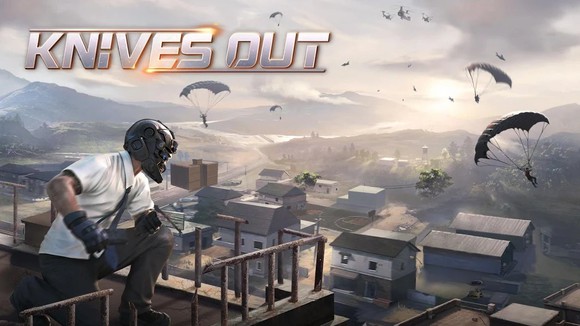
On a sequential basis, NetEase's gaming revenue rose 10% and its gross margin expanded 70 basis points -- thanks to the introduction and monetization of several new mobile games, including the PUBG clone Knives Out and Chu Liu Xiang. If these games gain momentum throughout 2018, they might offset its declines in aging titles like Onmyoji, New Ghost, Invincible, and its core Fantasy Westward Journey series.

Meanwhile, NetEase's cost of revenues rose 33% annually to 8.2 billion yuan ($1.3 billion). That big jump in spending, which it applied to refreshing its gaming portfolio and expanding its digital ecosystem, was exacerbated by unfavorable foreign-exchange headwinds.

A scene from NetEase's "Knives Out"

Image source: NetEase.

NetEase booked a foreign-exchange loss of 375.1 million yuan ($59 million) during the quarter, compared to 48.5 million yuan a year earlier, due to unrealized forex losses from dollar-denominated bank deposits and short-term loan balances. That pressure caused its operating cash flow to drop from 4 billion yuan a year ago to just 1.9 billion yuan ($297 million).

Solid revenue growth from its non-gaming businesses

NetEase's non-gaming businesses all posted solid top-line growth. Its e-commerce revenues, from its Kaola and Yanxuan marketplaces, more than doubled annually to 3.7 billion yuan ($595 million).

However, investors should be cautious about Yanxuan, since it uses a controversial strategy of selling unbranded products which are "identical" to their branded counterparts. The e-commerce unit's gross margin also fell 360 basis points year-over-year to 9.5%, due to higher discounts -- but that still marked a sequential expansion of 210 basis points.

The company's "email and other" revenues also more than doubled annually, to 1.2 billion yuan ($194 million), fueled by the growth of its live streaming platforms CC and Bobo, and its music streaming platform NetEase Cloud Music. The unit posted a negative gross margin of 9.9%, compared to positive 20.3% a year earlier, and negative 3.3% in the fourth quarter.

Lastly, NetEase's advertising revenues rose 4% annually to 462 million yuan ($74 million), supported by growing demand across the real estate, internet services, and auto industries. The unit's gross margin of 59% was an expansion from 57.3% a year earlier, but a drop from 71.2% in the previous quarter -- mostly due to a seasonal downturn in ad sales.

The bottom line

NetEase might regain its footing in the competitive gaming market, but Tencent clearly has the upper hand, with its expanding portfolio of homegrown hits and investments in overseas winners like PUBG and Fortnite.

Meanwhile, NetEase's e-commerce business faces tough questions about its "unbranded" strategy, and its ad business is facing off against giants like Baidu and Tencent, while its video and music streaming units are chasing market leaders like YY and Tencent Music.

Simply put, NetEase doesn't dominate any of its key markets, so it needs to spend a lot more money to stay competitive. This means we could see uglier bottom-line declines throughout the year.

Thursday, May 24, 2018

Uranium Price Drops Are Killing Cameco Corp. Today, but Setting Up a Brighter Future

Being a uranium miner hasn't been easy lately, with the spot price of the nuclear fuel hovering near 14-year lows. It's no wonder, then, that Cameco Corp. (NYSE:CCJ), the largest publicly traded uranium miner in the world,�has seen its shares fall more than 70% over the past decade. Earnings results, meanwhile, have dipped into the red over the last two years. Believe it or not, however, there's a bright side to all this bad news. Here's what you need to know.� �

Downturns lead to upturns

The first fact to remember is that uranium is a commodity. And commodities tend to go through repeating cycles in which high prices lead to increasing supply, which eventually creates a supply/demand imbalance, which in turn depresses prices. At some point, prices get so low that miners curtail production and stop building new mines, which leads to supply shortfalls and higher prices. The cycle then repeats.

An image of an atom held in a person's cupped hands.

Image source: Getty Images

Recently, there has too much uranium supply and not enough demand to soak it all up. However, the bottom of this cycle could be close at hand. Cameco recently announced that it was going to buy uranium on the spot market to satisfy its contracted demand, suggesting it is cheaper to buy uranium than mine it today. The company has also been shuttering mines to limit production, a tactic also being used by the world's largest uranium producer, Kazatomprom. As two of the largest uranium miners, their decisions have a huge impact -- industry watchers expect these two curtailments together to reduce industrywide supply by nearly 20% in 2018.� �

Long-term demand, meanwhile, appears set to rise. Nuclear power plants are being built around the world, which should more than offset closures in a number of developed markets. Right now there are 55 reactors being built, largely in Asia and the Middle East. As those reactors start up, utilities will be looking to ensure long-term uranium access. That, along with falling supply, should lead to higher prices and more long-term contracts.�

The contract thing

Long-term contracts have historically been a key part of Cameco's business model. Prices are so low today that it doesn't make sense to sign such deals, but the impact of previous contracts are pretty telling. In 2017, Cameco's average realized price for uranium was an incredible 65% higher than the average spot price for that year.� �

Cameco's Contract Shield

2017

2016

2015

2014

Cameco realized uranium price per lb.

$36.13

$41.12

$45.19

$47.53

Uranium spot price per lb.

$21.78

$25.64

$36.55

$33.21

Data source: Cameco Corp.

This is one of the reasons Cameco has held up so well financially in the face of a difficult market. In fact, the losses over the last two years were partly driven by the company's restructuring efforts (mine-closure and layoff costs) to adjust to the current market environment.

However, there's a ticking clock. In its annual report, Cameco notes that, "The annual average sales commitments over the next five years in our uranium segment is 22 million pounds, with commitment levels through 2020 higher than in 2021 and 2022." Those pounds are backed by contracts.�

Taken a step further, however, Cameco could have an issue on its hands if uranium prices don't start to move higher by the end of 2020. At that point, contracts begin to roll off, and there's currently nothing in the pipeline to replace them. That's roughly a year and a half away, which can be a very long time in the commodity world. That said, if the curtailments and new power plant construction lead to demand outstripping supply, Cameco could suddenly find itself operating in a very positive environment for signing new contracts.

A chart showing the projected shortfall in supply relative to demand in the future for uranium

A uranium market update from competitor Denison Mines Corp. Image source: Denison Mines Corp.

The World Nuclear Association, which promotes nuclear power, estimates that 24% of utility demand for uranium will be uncovered by supply in 2021, with that number growing to 62% by 2025. These are just estimates, of course, but it is both the direction and magnitude of the change that are important. By 2021, when Cameco's contract portfolio will be rolling off, utilities appear as if they will be increasingly looking for uranium that won't be readily available. That's a great backdrop for Cameco to sign some good long-term deals.�

This too shall pass

Life in general moves in cycles ... even more so in the commodity world. Cameco has been hammered by the uranium downturn, but it increasingly looks like the downturn is creating the foundation for the next upturn. This giant uranium miner, meanwhile, has long-term contracts in place that will help soften the blow of the downturn for another 18 months or so. Just about the same time when it looks likely that demand will start to pick up notably. For more aggressive investors, this down-and-out miner could be an interesting long-term opportunity today.

Wednesday, May 23, 2018

Is Latin America the Next E-Commerce Battleground?

In this segment from�Industry Focus: Tech, analyst Dylan Lewis is joined by Fool.com contributor Danny Vena to discuss MercadoLibre's�(NASDAQ:MELI) competitive advantages against larger online players and whether the company would make an attractive acquisition.

A full transcript follows the video.

<div class="wistia_responsive_padding" style="padding:56.25% 0 0 0;position:relative;"><div class="wistia_responsive_wrapper" style="height:100%;left:0;position:absolute;top:0;width:100%;"><iframe src="https://fast.wistia.net/embed/iframe/i7eyq7truo?videoFoam=true" title="Wistia video player" allowtransparency="true" frameborder="0" scrolling="no" class="wistia_embed" name="wistia_embed" allowfullscreen mozallowfullscreen webkitallowfullscreen oallowfullscreen msallowfullscreen width="100%" height="100%"></iframe></div></div> <script src="https://fast.wistia.net/assets/external/E-v1.js" async></script>

This video was recorded on May 18, 2018.

Dylan Lewis: We actually got some questions from one of our listeners, Simon, about some of these issues. He asks us, "I was interested to know what your thoughts are on Mercado. Specifically because of the deal Walmart announced for Flipkart, I can't help but think South America is emerging as another battleground for e-commerce." I think that speaks to the move that we saw with Amazon coming to Brazil a little bit. How do you feel about Mercado in Brazil and South America with a potentially larger player coming in there, Danny?

Danny Vena: I think that you have to understand the market in Latin America a little bit in order to understand the dynamic. And one of the things that you're going to see is that, in Latin America, they are a population that doesn't have that much in terms of credit cards and in terms of checking accounts. This is, by large, one of the few remaining cash-based markets in the world. A lot of people still pay for things by cash.

Now, MercadoLibre set up their payment system, called Mercado Pago, and folks can stop by a local convenience store, they can pay money at the counter and reload their account, similar to what PayPal did years ago. This is something that they set up years ago, so it's very well-penetrated within the region. Folks are not only using that to buy things on MercadoLibre's website, but they have also expanded off of the platform, so folks now use this to pay utility bills and at other stores, as an example.

This is one thing that MercadoLibre has going in its favor to compete with somebody like Amazon. Another is the hometown factor. When you talk about the region, Latin America is much earlier on the road to internet penetration, to e-commerce, to online shopping. So, when you look at these, this is a hometown company that the folks that live there trust. And at least for the time being, that's going to give them more of a competitive advantage. And, I think they can still compete with Amazon because they have such a head start in many of these areas.

Lewis: Simon asked us a second question. I think this speaks to the value of what MercadoLibre has already built there. Would MercadoLibre make a good acquisition target for a giant e-commerce company that wanted to establish a footprint in that region? He specifically notes Walmart, Alibaba, possibly JD.com. With what you just laid out, I would think the answer would have to be yes.

Vena: I agree with that, absolutely. I think that one of the things that you're going to see is consolidation in a lot of these international markets as Amazon ramps up. As big as the business is, and it accounted for something like 44% of the e-commerce growth last year, and maybe 4% of all online sales in the United States, it has not penetrated that far into international markets yet, although it's ramping up. One of the things that you're going to see is, there are going to be more mega deals like you saw with the bidding war between Walmart and amazon.com. And I think that Latin America is one of those areas in the world that's ripe for this type of consolidation. And I think there may be offers made for MercadoLibre in the near future, from one of these large e-commerce players.

Lewis: Particularly when you look at the size of the company, right? This is a $15 billion company, is that right? Somewhere in that neighborhood?

Vena: It is. It's firmly in the large mid-cap to small large-cap range. I think this is an easy acquisition to swallow for a large company. If you think about, I believe Walmart just paid, what was it, $16 billion for Flipkart?

Lewis: Something like that.

Vena: That puts MercadoLibre right in the same range in terms of how much somebody would have to pay to scoop up this company, plus whatever premium they had to pay. So, I think that's definitely a possibility. I don't know if they're interested in being acquired, but I think that there are definitely going to be companies out there that are interested in making such an acquisition.

Lewis: And, to be clear, there are some stocks that you buy because you think that there's an acquisition coming down the road, and it's that, this is more valuable in someone else's hands, basically. I think, with Mercado, this is a business that works, and it's a business that can continue to operate pretty well over the next five years. I'm a little worried about Amazon coming into that space, but I think that they've done enough to install themselves there that it's not a huge, huge worry for me.

So, when someone's buying this business, it's appealing in its own right. It's not like you're buying this stock thinking, ohh, someone will think it's more valuable than it currently is. You're buying a good business if you're owning this company.

Vena: I think that MercadoLibre will prosper whether or not Amazon gets into this space. Amazon may seem like they're invincible, but there are several historical precedents -- the Fire Phone, for instance -- where Amazon has not only failed, but failed spectacularly. And that's something that Amazon CEO Jeff Bezos has embraced. He understands there are going to be some places that he's going to fail. I think, if there's an area where Amazon has a tough time succeeding, I think Latin America is probably one of those, and I think MercadoLibre would be the reason.


Monday, May 21, 2018

GE to Receive $11 Billion for Its Transportation Business

General Electric Co. (NYSE: GE) announced Monday morning that Westinghouse Air Brake Technologies Corp.(NYSE: WAB), also known as Wabtec, has agreed to combine with GE’s Transportation division in a deal to create a new company that will make and sell rail equipment, software and services. GE will receive $2.9 billion in cash when the deal closes, now expected to occur early next year.

The value of the deal based on Wabtec’s closing price as of April 19, the last trading day when the stock price was unaffected by reports of a possible transaction, is $11.1 billion. Adjusted for a net tax step-up of $1.1 billion, the transaction value is $10 billion and is expected to be tax-free to both companies’ shareholders.

According to the announcement, Wabtec and GE Transportation will be combined into a wholly owned subsidiary of Wabtec. GE will retain 9.9% ownership of the new company, while Wabtec shareholders will own 49.9% and GE shareholders will own 40.2%.

This is John Flannery’s biggest deal so far in his brief tenure as GE CEO and it was quite cleverly done. GE gets $2.9 billion in cash plus a stake in any upside in the combined company’s future and the addition of $11 billion to Flannery’s promised shedding of $20 billion in low-performing assets.

In April, GE sold off its health care IT business for $1 billion, after shedding its overseas lighting and industrial solutions businesses. The sale of the industrial solutions business to ABB fetched $2.6 billion in cash. No sale price was announced for the lighting business.

Wabtec Executive Chair�Albert J. Neupaver will retain his position, as will Wabtec CEO Raymond T. Betler. Once the transaction is completed, Stephane Rambaud-Measson will become president and CEO of Wabtec’s Transit Segment and Rafael Santana will become president and CEO of Wabtec’s Freight Segment. Santana is currently president and CEO of GE Transportation.

GE stock traded up about 2.7% in Monday’s premarket session, at $15.37 in a 52-week range of $12.73 to $29.47. The stock’s 12-month price target is $17.40.

Wabtec shares traded up about 2.3% to $97.35, in a 52-week range of $69.20 to $95.54. The price target on Wabtec stock is $93.36.

ALSO READ: The Biggest Company the Year You Were Born

Sunday, May 20, 2018

Morningstar (MORN) Reaches New 52-Week High and Low at $114.71

Morningstar, Inc. (NASDAQ:MORN) reached a new 52-week high and low on Wednesday . The company traded as low as $114.71 and last traded at $114.20, with a volume of 975 shares changing hands. The stock had previously closed at $113.06.

Separately, BidaskClub upgraded Morningstar from a “buy” rating to a “strong-buy” rating in a research note on Thursday, March 22nd.

Get Morningstar alerts:

The company has a quick ratio of 1.68, a current ratio of 1.68 and a debt-to-equity ratio of 0.17. The company has a market cap of $4.85 billion, a price-to-earnings ratio of 37.16 and a beta of 0.66.

Morningstar (NASDAQ:MORN) last posted its quarterly earnings results on Tuesday, February 20th. The business services provider reported $0.91 earnings per share for the quarter. Morningstar had a return on equity of 16.54% and a net margin of 17.00%. The business had revenue of $243.10 million for the quarter.

The firm also recently declared a quarterly dividend, which was paid on Friday, April 27th. Investors of record on Friday, April 6th were paid a $0.25 dividend. This represents a $1.00 dividend on an annualized basis and a yield of 0.87%. The ex-dividend date of this dividend was Thursday, April 5th.

In other Morningstar news, Chairman Joseph D. Mansueto sold 12,214 shares of the company’s stock in a transaction on Tuesday, May 1st. The stock was sold at an average price of $108.79, for a total value of $1,328,761.06. Following the transaction, the chairman now directly owns 23,794,095 shares of the company’s stock, valued at approximately $2,588,559,595.05. The sale was disclosed in a legal filing with the SEC, which is accessible through this link. Also, insider Joseph D. Mansueto sold 18,534 shares of the company’s stock in a transaction on Tuesday, May 15th. The shares were sold at an average price of $112.29, for a total value of $2,081,182.86. Following the completion of the transaction, the insider now directly owns 23,699,751 shares in the company, valued at $2,661,245,039.79. The disclosure for this sale can be found here. Over the last ninety days, insiders sold 94,238 shares of company stock worth $10,318,404. Insiders own 57.50% of the company’s stock.

Hedge funds and other institutional investors have recently modified their holdings of the business. Golden Gate Private Equity Inc. grew its holdings in Morningstar by 6.2% in the 4th quarter. Golden Gate Private Equity Inc. now owns 68,300 shares of the business services provider’s stock valued at $6,623,000 after buying an additional 4,000 shares in the last quarter. Teachers Advisors LLC grew its holdings in Morningstar by 2.5% in the 4th quarter. Teachers Advisors LLC now owns 37,907 shares of the business services provider’s stock valued at $3,676,000 after buying an additional 908 shares in the last quarter. Yorktown Management & Research Co Inc acquired a new position in Morningstar in the 4th quarter valued at $735,000. Advisory Services Network LLC grew its holdings in Morningstar by 3,455.7% in the 4th quarter. Advisory Services Network LLC now owns 2,809 shares of the business services provider’s stock valued at $272,000 after buying an additional 2,730 shares in the last quarter. Finally, Eqis Capital Management Inc. acquired a new position in Morningstar in the 4th quarter valued at $423,000. 40.94% of the stock is currently owned by hedge funds and other institutional investors.

About Morningstar

Morningstar, Inc provides independent investment research services in North America, Europe, Australia, and Asia. It offers a line of data, research, and software tools on a range of investment offerings, including managed investment products, publicly listed companies, fixed income securities, private capital markets, and real-time global market data for financial advisors, asset managers, retirement plan providers and sponsors, and individual and institutional investors.

Saturday, May 19, 2018

Best Dividend Stocks To Watch Right Now

tags:RTN,LFUS,PAYX,LH,COP,

We're still in the wake of calendar 2017's first earnings season. So it wasn't surprising to see a raft of dividend raises last week, especially considering that this year has already been stuffed with lifts from every conceivable type of company.

Here are three notables out of last week's crop.

Image source: Getty Images.

Qualcomm

Following through on an earlier commitment, Qualcomm (NASDAQ:QCOM) has formally declared a new payout of $0.57 per share, an amount nearly 8% higher than its predecessor.

Qualcomm's most recently reported quarterly results show that its business is still robust, despite several tough legal battles�and a looming acquisition. The company's revenue continued to rise, increasing by almost 4% on a year-over-year basis to $6.0 billion. Adjusted earnings zoomed ahead by 23%, landing at $1.8 billion. That, by the way, shakes out in a very healthy net margin of 30%.

Best Dividend Stocks To Watch Right Now: Raytheon Company(RTN)

Advisors' Opinion:
  • [By ]

    Raytheon Co. (RTN) is well positioned to capitalize on missile orders given it has the highest exposure to missile defense and tactical missile sales to the Middle East, Bernstein said. Lockheed Martin Corp. (LMT) also stands to benefit in this light. 

  • [By ]

    Cramer and the AAP team say that the president's moves on behalf of Boeing (BA) signal good times for defense names, including Raytheon (RTN) . Find out what they're telling their investment club members and get in on the conversation with a free trial subscription to Action Alerts PLUS.

  • [By ]

    As I wrote yesterday, Lockheed' s older F-16 jet is considered a front runner in the Indian Air Force's potential $15 billion order for 110 fighter aircraft. Lockheed also produces the more modern (and stealth capable) F-22, and F-35 fighters. Both of these fighters are professionally thought to be effective against Russia's S-400 long range air defense missile system. That system is currently deployed in western Syria. Last week, Lockheed also won a $247 million contract from NASA to design and build an experimental aircraft that could operate without creating a traditional sonic boom. My price target: $375.

    Raytheon (RTN)

    First off, should the president decide to strike Syria without the use of American pilots, guess who produces the Tomahawk missile? That's right. These guys. On top of that, you might have noticed that two weeks ago, Poland agreed to spend $4.75 billion on RTN's Patriot missile defense system. By the way, this is the largest weapons deal in the history of Poland. Russia's annexation of the Crimean peninsula has not been lost on this former Warsaw Pact nation.

  • [By ]

    And it’s not like there aren’t plenty of catalysts in the wind that could derail the whole thing. For one, there are plenty of big earnings reports this morning that could mess things up, especially in some currently out-of-favor sectors like staples (MO, HSY) and defense (RTN).

  • [By ]

    Raytheon (RTN) : "I think Raytheon is one of the best defense names."

    Tallgrass Energy Partners (TEP) : "That dividend is a red flag. That group has become a house of pain and I'm not going there."

Best Dividend Stocks To Watch Right Now: Littelfuse Inc.(LFUS)

Advisors' Opinion:
  • [By Joseph Griffin]

    Littelfuse (NASDAQ:LFUS) Director John E. Major sold 1,648 shares of the company’s stock in a transaction that occurred on Friday, May 11th. The shares were sold at an average price of $215.86, for a total value of $355,737.28. Following the completion of the transaction, the director now directly owns 26,254 shares in the company, valued at approximately $5,667,188.44. The transaction was disclosed in a filing with the Securities & Exchange Commission, which is available at this hyperlink.

  • [By Ethan Ryder]

    BidaskClub upgraded shares of Littelfuse (NASDAQ:LFUS) from a sell rating to a hold rating in a research note published on Friday morning.

    Several other equities analysts have also commented on LFUS. ValuEngine raised Littelfuse from a hold rating to a buy rating in a report on Thursday, May 3rd. Barrington Research reissued a hold rating on shares of Littelfuse in a report on Tuesday, May 1st. Finally, Zacks Investment Research lowered Littelfuse from a buy rating to a hold rating in a report on Wednesday, April 4th. Six equities research analysts have rated the stock with a hold rating and three have given a buy rating to the stock. Littelfuse has a consensus rating of Hold and a consensus price target of $212.75.

  • [By Ethan Ryder]

    Littelfuse (NASDAQ:LFUS) was upgraded by stock analysts at ValuEngine from a “hold” rating to a “buy” rating in a report issued on Thursday.

  • [By Stephan Byrd]

    Littelfuse (NASDAQ: LFUS) and ABB Group (NYSE:ABB) are both computer and technology companies, but which is the better business? We will compare the two companies based on the strength of their valuation, risk, analyst recommendations, profitability, institutional ownership, dividends and earnings.

Best Dividend Stocks To Watch Right Now: Paychex Inc.(PAYX)

Advisors' Opinion:
  • [By ]

    "For many other stocks, such as gaming (EA, TTWO) and IT services ( (PAYX) , (GPN) ), regulatory risks for Facebook may not necessarily pose a risk to their core business models," writes Goldman Sachs strategist David Kostin. "We expect correlations for these stocks would likely revert to historical averages and present potential buying opportunities given their underperformance since March."

  • [By Max Byerly]

    GW&K Investment Management LLC decreased its holdings in shares of Paychex (NASDAQ:PAYX) by 15.0% in the 1st quarter, according to the company in its most recent disclosure with the Securities and Exchange Commission. The institutional investor owned 509,839 shares of the business services provider’s stock after selling 89,891 shares during the quarter. GW&K Investment Management LLC owned 0.14% of Paychex worth $31,401,000 at the end of the most recent quarter.

  • [By Ethan Ryder]

    Schaper Benz & Wise Investment Counsel Inc. WI trimmed its holdings in shares of Paychex (NASDAQ:PAYX) by 2.9% in the first quarter, according to its most recent 13F filing with the Securities and Exchange Commission. The fund owned 203,575 shares of the business services provider’s stock after selling 6,098 shares during the quarter. Paychex accounts for approximately 1.9% of Schaper Benz & Wise Investment Counsel Inc. WI’s portfolio, making the stock its 24th biggest position. Schaper Benz & Wise Investment Counsel Inc. WI’s holdings in Paychex were worth $12,538,000 as of its most recent SEC filing.

  • [By ]

    In the Lightning Round, Cramer was bullish on Paychex (PAYX) , Martin Marietta Materials (MLM) and XPO Logistics (XPO) .

    Cramer was bearish on 3M (MMM) , Fitbit (FIT) and Granite Construction (GVA) .

Best Dividend Stocks To Watch Right Now: Laboratory Corporation of America Holdings(LH)

Advisors' Opinion:
  • [By Max Byerly]

    MUFG Americas Holdings Corp trimmed its stake in LabCorp (NYSE:LH) by 55.0% during the first quarter, according to the company in its most recent Form 13F filing with the Securities & Exchange Commission. The fund owned 10,683 shares of the medical research company’s stock after selling 13,073 shares during the quarter. MUFG Americas Holdings Corp’s holdings in LabCorp were worth $1,728,000 as of its most recent filing with the Securities & Exchange Commission.

  • [By Joseph Griffin]

    Here are some of the headlines that may have impacted Accern Sentiment’s rankings:

    Get Laboratory Corp. of America alerts: Stock Traders Buy Large Volume of Laboratory Corp. of America Put Options (LH) (americanbankingnews.com) Credit Suisse Group Lowers Laboratory Corp. of America (LH) to Hold (americanbankingnews.com) Laboratory Corp. of America (LH) Set to Announce Quarterly Earnings on Wednesday (americanbankingnews.com) Can LaunchPad Aid LabCorp's (LH) Covance Arm in Q1 Earnings? (finance.yahoo.com) As Laboratory Corp Of America Holdings (LH) Shares Rose, Shareholder Veritas Investment Management Llp … (djzplanet.com)

    LH has been the subject of several research analyst reports. Craig Hallum restated a “buy” rating and set a $204.00 price target (up from $180.00) on shares of Laboratory Corp. of America in a research note on Wednesday, February 7th. Morgan Stanley upped their target price on Laboratory Corp. of America from $182.00 to $192.00 and gave the stock an “overweight” rating in a research report on Wednesday, February 28th. Zacks Investment Research downgraded Laboratory Corp. of America from a “hold” rating to a “sell” rating in a research report on Wednesday, January 3rd. Mizuho set a $178.00 target price on Laboratory Corp. of America and gave the stock a “hold” rating in a research report on Wednesday, January 24th. Finally, Robert W. Baird set a $183.00 target price on Laboratory Corp. of America and gave the stock a “hold” rating in a research report on Thursday, February 8th. Seven investment analysts have rated the stock with a hold rating, ten have assigned a buy rating and two have assigned a strong buy rating to the company. The company presently has an average rating of “Buy” and a consensus price target of $189.19.

Best Dividend Stocks To Watch Right Now: ConocoPhillips(COP)

Advisors' Opinion:
  • [By Garrett Baldwin]

    Eight Seconds… $1,260 Richer: Words can't describe what you'll see in this shocking footage – because you'll witness, live on camera, one man become $4,238 richer with just three clicks of a mouse. And if you follow the simple instructions in this video, you'll learn how to set yourself up for an instant $2,918 payday opportunity. You need to see this to believe it…

    Three Stocks to Watch Today: COP, HD, HSBC ConocoPhillips (NYSE: COP) has seized assets from the Venezuelan-owned firm PDVSA in the Caribbean. The company won a court case that will allow it to take over assets owned by the Venezuelan government. The court enabled the seizures as part of a broader plan to allow the firm to recoup roughly $2 billion following the 2007 nationalization of its assets in Venezuela by the huge Castro-led government. Monday will be a quiet day on the earnings front. Investors are looking to Tuesday's calendar, when The Home Depot Inc. (NYSE: HD) reports earnings. Tomorrow, Wall Street analysts expect that Home Depot will report earnings per share of $2.07 on top of $25.2 billion in revenue. Investors will be hoping that the company reports strong profits thanks to an improving U.S. economy and the recent tax reform law. Expect a lot of chatter today about blockchain technology. That's because ING Bank and HSBC Holdings Plc.�(NYSE: HSBC) announced over the weekend that they engaged in their first trade ever using blockchain technology. The two engaged in a trade on behalf of Cargill to finance a shipment of soybeans from Argentina to Malaysia. Today, look for earnings reports from Agilent Technologies (NYSE: A), Itron Inc.�(Nasdaq: ITRI), Vipshop Holdings Ltd.�(Nasdaq: VIPS), Amyris Biotechnologies Inc. (Nasdaq: AMRS), Sky Solar Holdings Ltd.�(Nasdaq: SKYS), Mazor Robotics Ltd.�(Nasdaq: MZOR), China Lodging Group Ltd. (Nasdaq: HTHT), and Mimecast Ltd.�(Nasdaq: MIME).

    Follow�Money Morning��on��Facebook,�Twitter, and�LinkedIn.

  • [By Matthew DiLallo]

    ConocoPhillips' (NYSE:COP) management team has worked tirelessly in recent years to transform the oil company into one that could thrive on lower prices. As a result, it�cashed in during the first quarter�when crude was well above its baseline plan. That strong showing sets the company up for continued success in the coming year -- a key theme running through management's comments on the accompanying conference call, which detailed recent achievements and how they frame what lies ahead.�

  • [By Paul Ausick]

    Before markets open Friday, the two energy producers among the 30 Dow Jones industrial stocks will be reporting first-quarter results. Exxon Mobil Corp. (NYSE: XOM) and Chevron Corp. (NYSE: COP) are both expected to show higher revenues and profits, largely as a result of higher commodity prices. But there are other issues at play as well.